
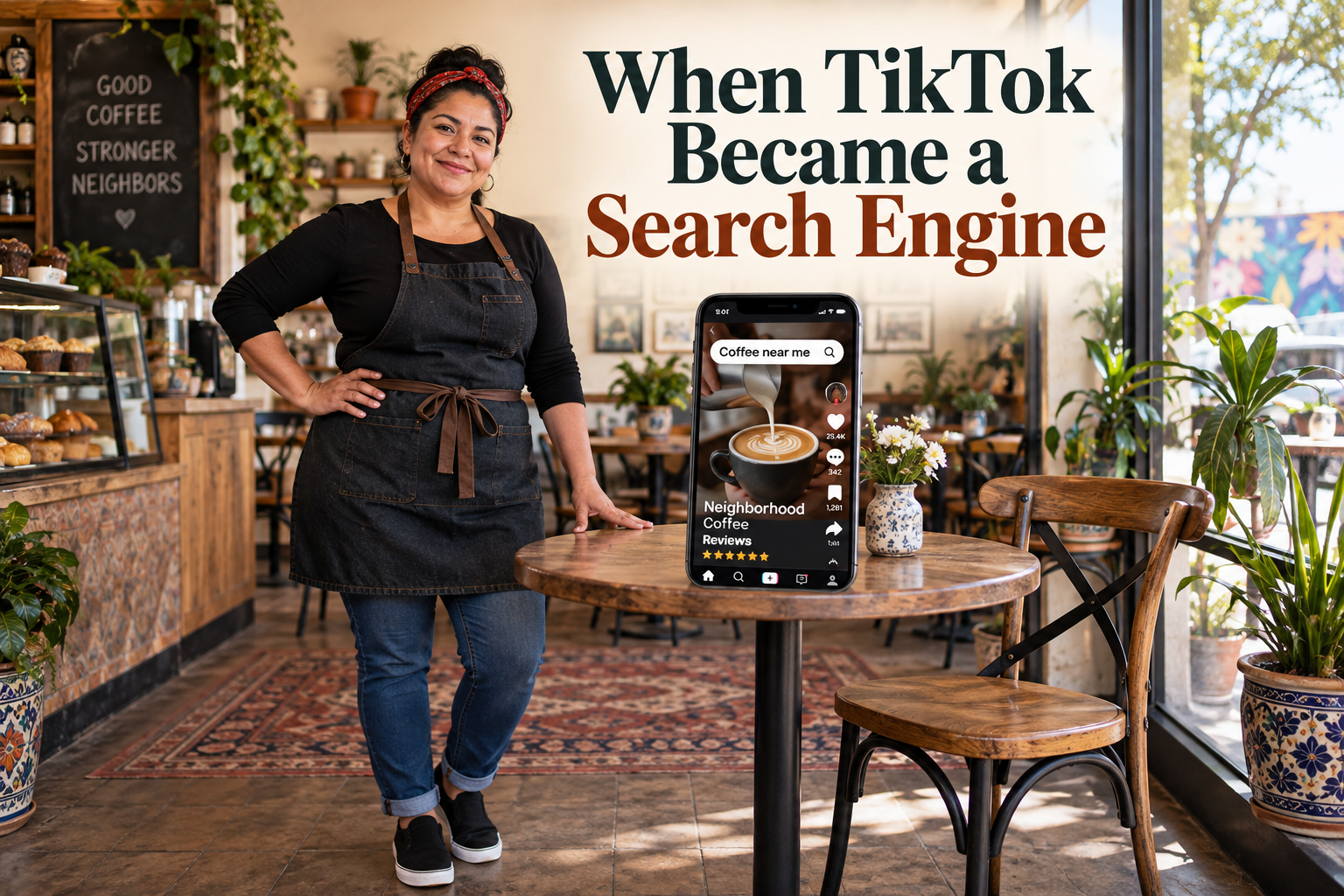
TikTok has become a place where people search for recommendations, experiences, and practical demonstrations. In Adobe Express’s 2026 survey, 49 percent of consumer respondents said they had used it as a search engine, compared with 41 percent in the 2024 survey. That growth reflects a changing search habit, rather than proof that TikTok has replaced Google.
The confession that started the story
Companies rarely praise a rival in public. That is why a moment from July 2022 still stands out. Speaking at Fortune's Brainstorm Tech conference, Prabhakar Raghavan, the Google senior vice president who ran Knowledge and Information, talked openly about a habit his company was seeing in its own studies.
New internet users, he said, did not have the expectations older users had grown up with. They did not tend to type keywords. They looked to discover content in more immersive ways. Then came the number that made headlines. In Google's studies, almost 40 percent of young people, when looking for a place for lunch, did not go to Google Maps or Search. They went to TikTok or Instagram.
Google confirmed the figure came from internal research involving United States users ages 18 to 24. The admission mattered more than the spreadsheet. The company that had turned its own name into a verb for searching was saying, on stage, that a generation was starting somewhere else.
Raghavan also noted that young people had never seen a paper map, yet maps products were designed to look like one stuck on a phone. The problem was not a missing feature. It was a different mental model of what finding something should feel like.
Entertainment becomes discovery
TikTok is strongly associated with entertainment, but watching and searching can overlap. People were already watching strangers cook, travel, fix things, review products, and walk through neighborhoods. A video can spark a question, and the search box offers a way to keep exploring it.
The content had a quality text results often lacked. You could see the restaurant, not just read its name and rating. You could watch a dish arrive, hear the room, and judge the portion with your own eyes. A written review asks for trust. A video from the actual place feels, fairly or not, closer to evidence.
That helps explain why visual topics fit the experience. Recipes, product demonstrations, and visits to restaurants all benefit from seeing something happen. A video can show texture, movement, or atmosphere in ways a short written description cannot.
What the numbers say now
Four years after Raghavan’s comments, Adobe Express surveyed 807 consumers and 200 small business owners in the United States. Its consumer findings suggest that TikTok search is more than a passing curiosity. The figures describe that survey sample, rather than a count of everyone in the country.
The sample also matters when interpreting the research. More than half of the consumer respondents were millennials, and different generations were represented in different proportions. Comparing two surveys is useful, but it does not show that every age group changed its behavior in exactly the same way.
Respondents cited short videos, storytelling, and interaction as reasons to choose TikTok. Tutorials and product reviews were popular formats. That combination helps explain the appeal of seeing a person demonstrate something, rather than reading a description alone.
Read together, those numbers suggest people are not only looking for facts on TikTok. They are looking for a person. A fact can be copied anywhere. A person showing what happened when they tried something carries a texture a list of links struggles to match.
The plot twist in the data
Here is where the story gets more interesting than the headlines. Adobe’s survey found that Gen Z respondents remained especially likely to prefer Google overall. Using TikTok sometimes and choosing it as a primary search tool are different behaviors.
In other words, search did not move from one winner to another. It splintered. A young person might start a restaurant hunt on TikTok, check a debate on Reddit, ask a chatbot to summarize options, and still open Google for hours and directions. The old idea of a single front door to the internet is fading.
That mix changes what people expect from search. A person may want a demonstration for one task, a detailed document for another, and a map for the journey itself. No single format is equally useful for every situation.
Trust complicates the picture. A convincing video can make an experience feel tangible without proving that its claims are accurate. Popularity, presentation, and expertise are different things, even when they appear together on the same screen.
A search box with a camera roll
Step back and the larger shift comes into focus. For decades, search meant words in a box, matched against words on pages. Social search breaks that symmetry. The query is still words, but the answer is a face, a voice, a room, a meal. The unit of information changed from the document to the moment.
That change also complicates how people judge authority. Someone who films an experience convincingly may attract attention without having expertise in the subject. A personal demonstration can be useful evidence of one experience, but it is not automatically reliable evidence of a general claim.
Traditional search and social search can also meet in the same journey. Someone may watch a video, look up the business behind it, and check its website before making contact. The choice is often about which tool suits the immediate task.
Whether TikTok remains central to social search is a separate question. Platforms can change, but the attraction of searching by watching is easy to understand. People want information they can inspect, relate to, and place in the context of everyday life.
The search box is still there. It now shares attention with feeds that can turn a casual moment of watching into a deliberate search.
Sources
- Adobe Express, consumer search survey and methodology
- TechCrunch, reporting on Google’s July 2022 conference remarks