
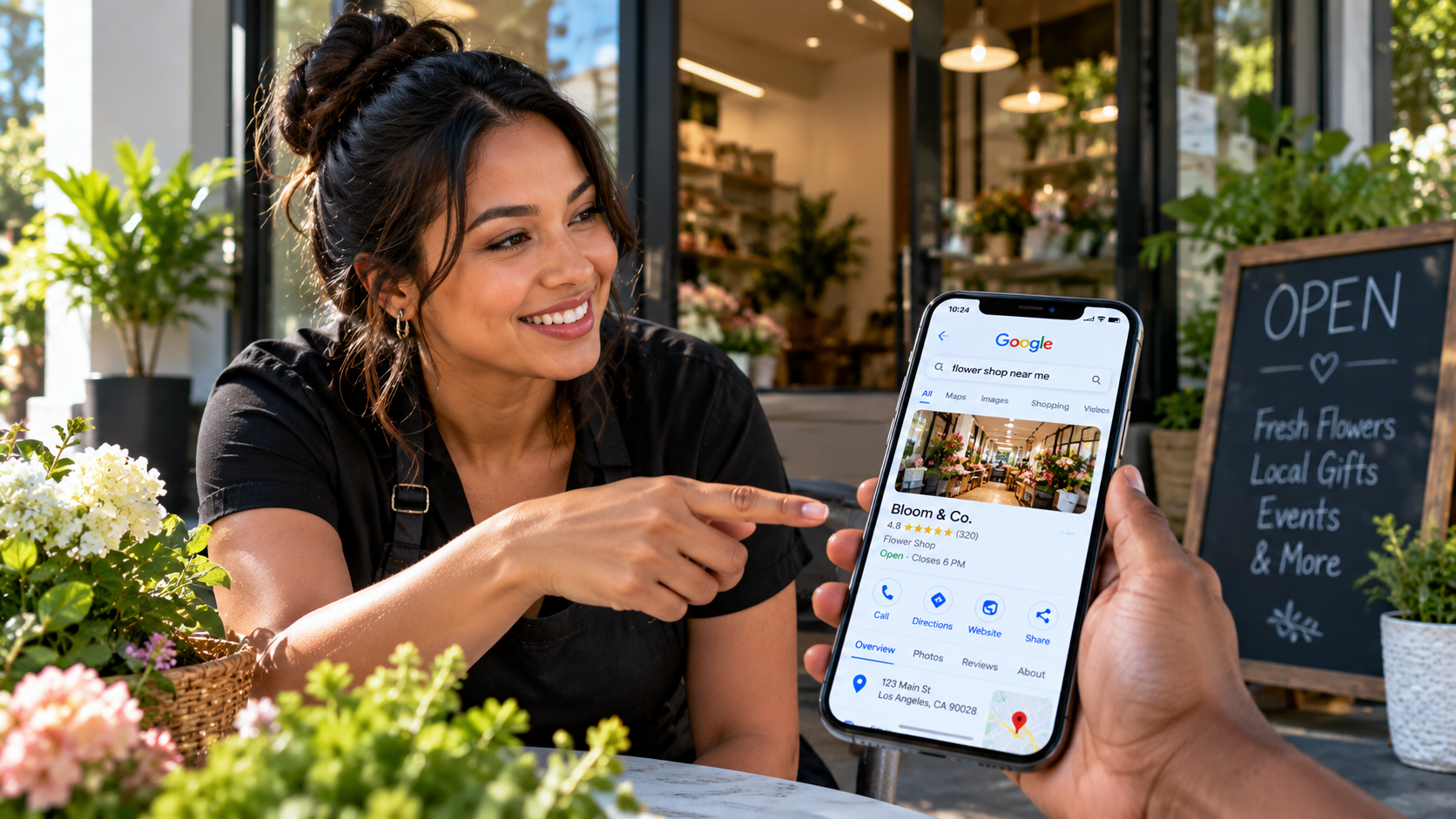
A business owner can spend months getting a website right. The photographs finally look like the real work, the words sound like the people behind the counter, and the pages load the way they should. Then a customer explains, almost as an aside, how they chose. They read the reviews first. They looked at the stars, skimmed what strangers said last month, and only after that, if the feeling was good, did they bother with the website at all.
That order of events would have sounded backwards a generation ago. The business introduced itself, and reputation followed behind, carried by neighbors and repeat customers. Now reputation walks into the room before the business does, written by people the owner may never meet, and it speaks in a voice the owner cannot control.
For many owners, accepting that order is the hardest part of modern marketing. The website is theirs. The reviews are not, and yet the reviews are often the first impression that counts.
Word of Mouth Learned to Sit Still
Word of mouth was never new. What changed is that it stopped moving. A recommendation once lived in a conversation at a school gate, a job site, or a family dinner, and then it faded unless someone repeated it. Online reviews gave that same human judgment a permanent address. A comment written by a tired traveler, a relieved homeowner, or an unhappy patient three years ago can still greet a stranger this morning.
The Pew Research Center was documenting this shift as early as 2016, when about half of American adults who used the internet said they sometimes or always read online reviews before buying something new. In the years since, review reading stopped being a habit of careful shoppers and became part of ordinary hiring, for restaurants and roofers, dentists and daycare centers, lawyers and local shops alike.
BrightLocal, which surveys consumers every year about local businesses, has tracked that normalization in detail. Its Local Consumer Review Survey has repeatedly found that most consumers read reviews for local businesses, that Google is the most used place for reading them, and that recent reviews carry more weight than older praise. A glowing comment from years ago comforts less than a steady pattern from the last few weeks, because the recent pattern feels like the business as it is now, not as it was.
Strangers Trust Other Strangers in a Particular Way
There is a curious honesty in how people read reviews. Almost nobody believes every review is fair. Readers know that one angry customer can exaggerate, that one delighted customer can gush, and that a competitor or a crank can hide in the crowd. They read anyway, not because they trust each voice, but because they trust the shape of many voices together.
A single five star review sounds like a favor. A long run of them, mentioning specific people, specific jobs, and specific relief, starts to sound like a pattern. A single one star review sounds like a bad day. A cluster of them, raising the same complaint in different words, starts to sound like a warning. Customers have become skilled readers of that middle ground, discounting the extremes and listening for what repeats.
That is why reviews often persuade more deeply than a polished website can. A website says, in effect, trust us, we do good work. A review says, I had the same worry you have now, I called them anyway, and here is what happened. The second sentence answers the fear the first sentence cannot reach, because it comes from someone with nothing obvious to gain.
The Stars Speak Before the Story
Star ratings add another pressure, because they compress a complicated reputation into a number that can be judged in a glance. A customer comparing three businesses on a phone screen may never open the lowest rated one at all. The sorting happens before the reading, quietly, in the space between one thumb movement and the next.
Researchers and consumer advocates have argued for years about whether that compression is fair. Averages hide the difference between a business with ten reviews and one with a thousand. A rating can punish a company for a problem it fixed, or reward one coasting on old goodwill. Yet the number survives because it answers the question a busy person is really asking, which is not whether a business is perfect, but whether other people found it safe enough to try.
The debate grew sharper when fake reviews entered the picture. In August 2024, the Federal Trade Commission announced a final rule banning fake and misleading reviews and testimonials, including reviews generated to misrepresent what real customers experienced. Regulators would not have written such a rule for a curiosity. They wrote it because reviews had become economic infrastructure, valuable enough to counterfeit and trusted enough to require protection.
What a Customer Is Really Looking For
Spend time with how people actually read reviews and a pattern emerges that has little to do with perfection. Customers look for signs of ordinary reliability. Did the business show up when it said it would. Did it communicate when plans changed. Did it treat a problem as something to make right, or as something to argue about. For services that enter a home, an office, or a family decision, those details outweigh grand claims every time.
They also look for themselves in the reviews. A homeowner reads the review from another homeowner with a similar house and a similar worry. A bride reads the review from another bride. A manager choosing a vendor for an office reads the review that mentions a schedule, a crew, and a building like theirs. Recognition does quiet work here. The right review from the right stranger can settle a decision that a beautiful homepage left open.
None of this means the website stopped mattering. It means the website now plays a different role. By the time a visitor arrives, the reviews have often already decided whether that visitor is hopeful or guarded. The site then confirms a leaning, answers practical questions, and either deepens the trust the reviews began or gives the visitor a reason to doubt it. Owners who imagine the website as the opening argument are working from an older script. For many customers, it is the closing one.
The Conversation a Business Cannot Script
There is a loss in all this, and it is fair to name it. A business used to introduce itself in its own words, at its own pace. Now the introduction is assembled by search engines, platforms, and past customers, in fragments, out of order, and sometimes unfairly. A single bad experience can sit at the top of that introduction for months, wearing the uniform of fact.
There is also something democratic in it that owners, on their honest days, recognize. A business with no advertising budget and no famous name can be chosen because ordinary people said, clearly and in public, that it treated them well. Reputation used to require connections. Now it requires witnesses, and witnesses can come from anywhere.
So the reading order stands. Reviews first, website second, phone call third, if the first two earn it. The business still gets to speak, and what it says still matters. It just no longer gets to speak first, and in a market where the first voice frames everything that follows, that change in order may be the most important change of all.
Sources: https://www.brightlocal.com/research/local-consumer-review-survey/ https://www.pewresearch.org/internet/2016/12/19/online-reviews/ https://www.ftc.gov/news-events/news/press-release s/2024/08/federal-trade-commission-announces-final-rule-banning-fake-reviews-testimonials
StartWeb7 | SEO, Web Design & AEO | startweb7.com