
Every town has one. The shop on the busy corner with the sign people have passed for years. The contractor with trucks parked in plain view. The bakery, the salon, the repair shop that feels like a landmark because traffic flows past it all day. Ask the owner how business finds them and the answer sounds reasonable. People know where we are. People drive by. People have always driven by.
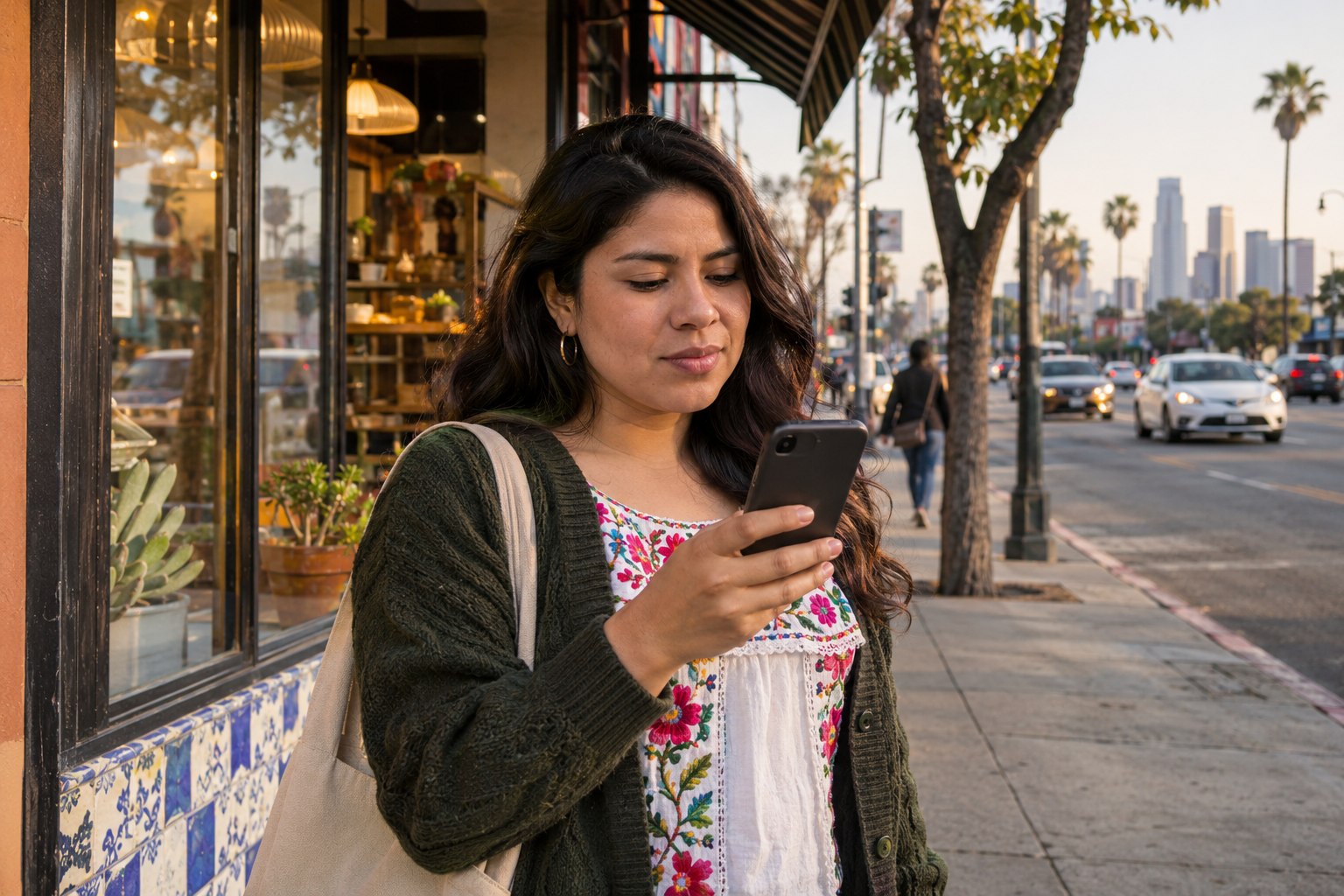
Then, on an ordinary afternoon, a driver who passed that same storefront in the morning sits in a parking lot two streets away, phone in hand, needing exactly what that business sells. She types the plain words anyone would type. She looks at the names that come back. The landmark is not among them. She chooses one of the businesses she has never seen with her own eyes, follows the directions, and spends her money there. The storefront she drove past never knew she existed.
Two kinds of visibility stopped being the same thing
For most of the history of local business, visibility was physical. A good location put a business in front of people before they knew they needed it. The sign planted a memory. When the need arrived weeks or months later, the memory did quiet work, and the customer returned to the place she could already picture. Location was not just convenience. It was advertising that ran all day without anyone writing a check for each viewing.
That chain still exists, but it now has a break in the middle. The need still arrives. The memory may even still be there. What has changed is the moment between feeling the need and acting on it. That moment now lives on a phone, and the phone does not consult the memory of a morning commute. It consults what it can find, verify, and present in that instant, in the language the person just used, near the place she is standing right now.
Research on local search habits keeps describing the same compressed behavior. BrightLocal consumer research in 2026 reported that most people decide which local business to use quickly, often in under half an hour, and that they consider only a handful of names before choosing. A separate BrightLocal survey of consumers who had searched for a local business in the previous three months found that 73 percent began their most recent search on a mobile phone. The street may introduce a business over years. The phone decides in minutes, and it decides from its own list, not from the street.
The drive by creates familiarity, not a search result
There is a painful distinction here that owners rarely hear stated plainly. Being recognized is not the same as being found. Recognition lives in the minds of people who already pass a place, already know a name, already have a reason to return. Finding is what happens to strangers, and to familiar people acting like strangers because the situation is urgent, unfamiliar, or simply easier to hand to a phone.
A parent with a flooded kitchen does not calmly recall every plumber whose truck she has ever seen. A traveler with a flat tire does not inventory the tire shops along the route he drove yesterday. A homeowner planning a remodel she has never done before does not limit herself to the one showroom on her commute. In each case, the person starts fresh, asks the phone a fresh question, and trusts the answer more than her own scattered recollections. The business that counted on being remembered is competing, whether it knows it or not, against businesses it has never heard of that happen to be present in that fresh answer.
This is why the experience inside the business can be so misleading. Regulars still come. The counter still gets busy at the usual hours. Nothing looks broken. What is missing never announces itself, because the missing customers were never regulars, never inquiries, never even visitors. They are the growth that quietly went elsewhere, day after day, while the sign kept doing its job for the people already inclined to come.
The street is crowded and the screen is not
Stand outside a storefront at rush hour and the audience looks enormous. Hundreds of cars. Thousands of people a week. It feels like exposure no advertising could buy. Now consider the screen those same people will look at later. It does not show hundreds of businesses. It shows a few names prominently, a map with a limited set of pins, and increasingly an AI answer that names one, two, or three businesses with confidence and moves on.
What to check when a familiar business is missing from local search
Start with the searches a new customer would make, not only your company name. Search for the exact service, the city or neighborhood and relevant service variations. Compare the businesses that appear and note whether your own service information is clear and current.
Confirm that the business name, address or service area, operating details and service categories are consistent where customers find them. Check that your website has a useful page explaining the actual service and location, rather than relying on the homepage to answer every question.
Finally, test the experience from a phone. Can a visitor understand what you do, find the location or service area, and call or request a quote without hunting? The most valuable local SEO work links a relevant search to a clear service page and a simple way to inquire.
The contrast explains a frustration many owners describe in almost identical words. Everyone knows us, but the phone does not ring the way it should. Both halves can be true at once. Everyone on that road may genuinely know the business by sight, and almost none of that knowledge converts when the search begins, because the search was never drawing on road knowledge in the first place. It draws on a separate record, built from what the business has published, what customers have said about it, and how clearly the whole picture hangs together for a machine to repeat.
An older generation of owners watched a similar break happen once before, when the printed directory faded and the businesses that had relied on a familiar listing or a big typeface discovered that the new directory rewarded a different kind of presence. The lesson was not that location stopped mattering. Location still matters enormously once a customer chooses. The lesson was that being easy to reach after the choice is not the same as being present at the moment the choice is made.
What the invisible storefront is really losing
It would be comforting to think the loss is only about new technology leaving traditional businesses behind, a tidy story about old ways and new tools. The reality is less tidy and more personal. The business everyone drives past is often a good business. It survived. It employs people. Its work is visible in the neighborhood in the most literal sense. Losing the phone moment does not feel like a judgment on any of that, which is exactly why it is so hard to accept. The judgment, such as it is, happens earlier and quieter, in a list the owner never sees, assembled for a person the owner never meets.
Over a season, those quiet losses compound into a shape owners recognize without always understanding. Referrals carry more of the load than they used to. Slow weeks feel slower because there is no steady stream of strangers to soften them. Growth depends on people who already know the business telling other people, a wonderful channel that cannot be the only one. The storefront becomes a place that rewards loyalty beautifully and discovery hardly at all.
The driver from the start of this story was not disloyal, and she was not careless. She passed the business in the morning and meant it no harm in the afternoon. She simply lived in the two worlds every customer now lives in, the physical one she moves through and the searchable one she consults, and she trusted each world for a different thing. The street told her the business existed. The phone told her where to go. Until a business is present in both tellings, it can be famous on its own corner and unknown at the only moment that pays.
/ local consumer review survey/ , / seoscanpro.ai/ blog/
Discuss your project
StartWeb7 provides ongoing SEO and AEO management for businesses that need to turn local searches into relevant inquiries. Request a consultation to discuss your current service pages and local search presence.